Building facade · Glazed ceramic tile · Main Street, Ventura
The Watermark A 1920s match, made by hand
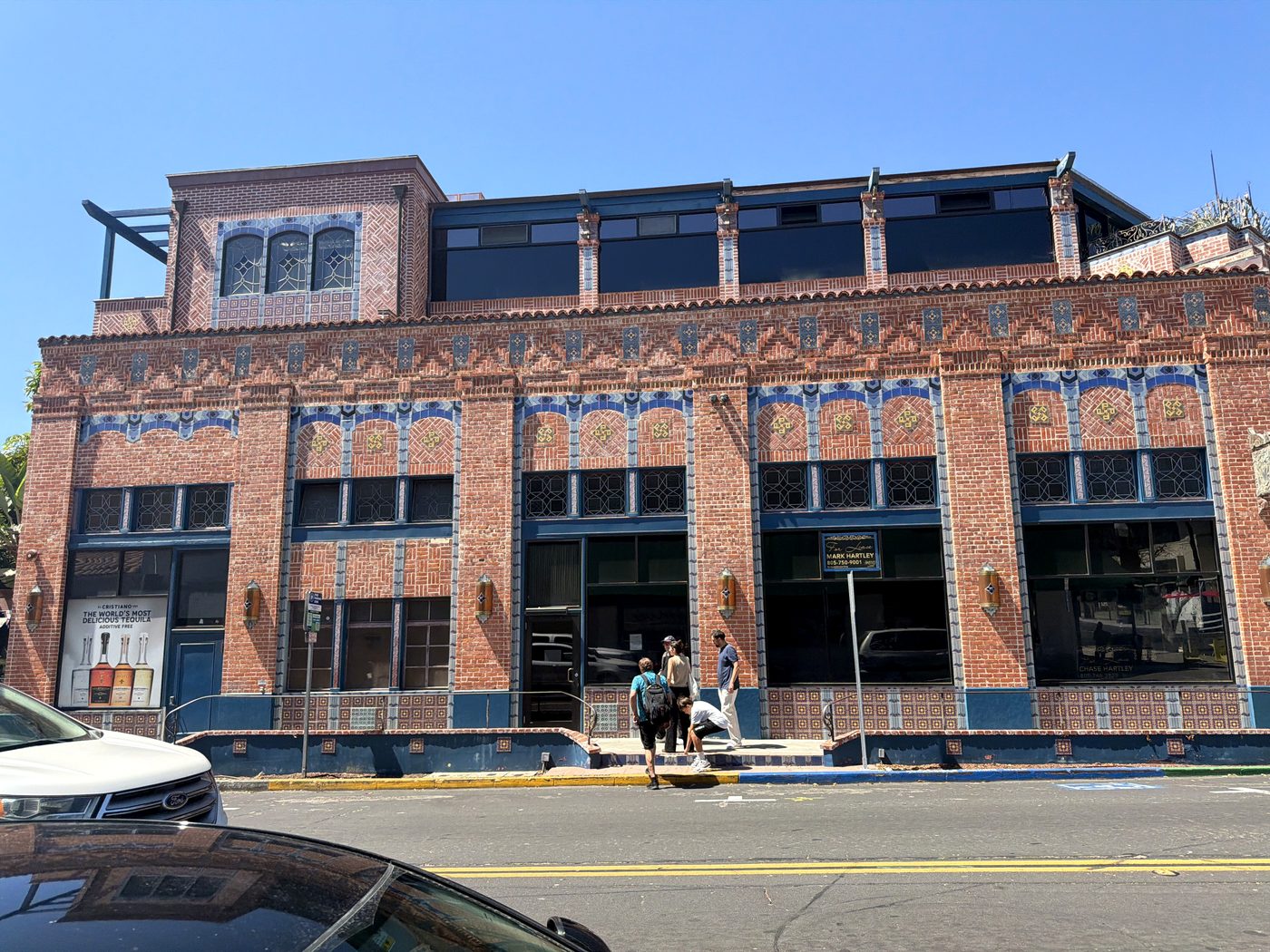
A 1920s bank on the corner of Main and California lost much of its tile in a later remodel. In 2006 Michael O’Kelly re-created it, matching colours first made with glazes no one is allowed to use today, so closely that his tile and the 1920s originals sit side by side without a seam. Then he made the tile for a new top floor to match.
1920s tile, re-created by Michael O’Kelly
- Built
- 1920s, as a bank
- What Michael made
- About 60–75% of the tile you see, in 2006, and all the tile on the new top floor
- Medium
- Hand-glazed ceramic tile
- Landmark
- San Buenaventura Historic Landmark No. 15
- Location
- 598 East Main Street, at California Street
Film · 1 min 32 s
Michael on the Watermark
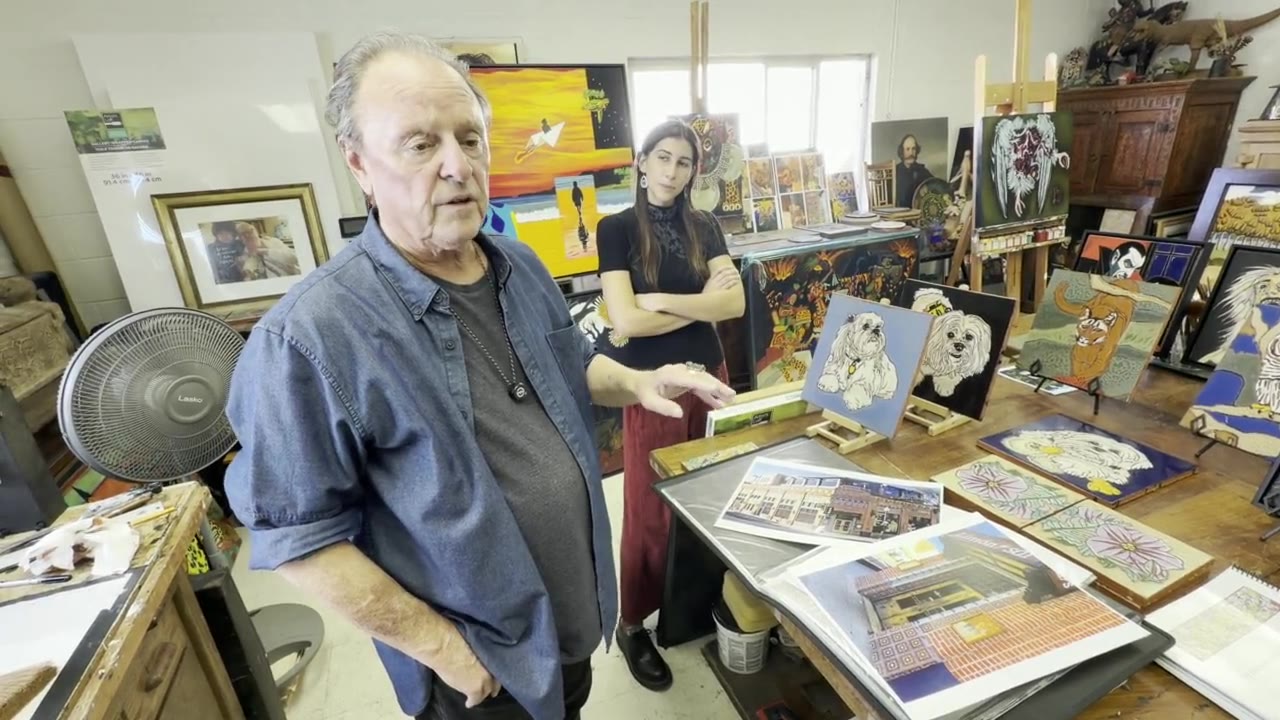
In his studio, with the photo album open at the Watermark, Michael explains what was missing, and how he re-created 1920s colours without the lead, barium and arsenic the originals were made with, so well that you can’t find the join.
“We managed to execute them exactly the way they looked in the 1920s.”
- Which 1920s tile went missing, and when
- Why the old colours can’t be made the old way
- How much of the tile on the building is his
Has your building lost its tile?
A lot of older buildings look tired and drab after a remodel or two. Michael can match what survives, re-create what was lost and bring the front back to life. Ask him for an estimate or a concept drawing.
Talk to Michael about your building →Read the full transcript
“This building is the Bahn’s Building. Originally it was a bank, then it became a jewelry shop, and then it became a restaurant called Watermark. It’s a beautiful building. It goes back to the 1920s, and it had original tile in the wainscoting around the doors and window frames. But a lot of that was ripped out at some point, I think probably in the ’60s or ’70s. Someone took the tile away. So we were asked by Mark Hartley, who owns the building, who also owned a couple of other buildings downtown, if we could re-create this tile.
It was a bit of a challenge, because in those days they used lead and barium and arsenic to create some of the colours, and we’re all prohibited from using those materials now because they’re dangerous. So we had to come up with the colours in a different way, and we managed to execute them exactly the way they looked in the 1920s.
About 60 to 75%, I’m not sure of the exact amount, of the ceramics you see on that building, we made in 2006. And the sad part for us is that nobody can tell the difference. So they don’t know we did it. But we know we did it. And the building just livened up. Then they added a third floor to the building, and we made the same, similar tile for that architectural element too. So it became one of the most significant architectural buildings in this part of Ventura.”
Michael O’Kelly, in his studio, October 2026. Lightly edited from an automatic transcript.
Before and after
Putting back what a remodel took away
- Before
- The 1920s tile around the doors and windows “ripped out,” leaving the bands patchy and incomplete.
- After
- Cobalt arches, gold medallions and star-pattern panels, back where they were, and on a new top floor too.
The building went up in the 1920s as a bank, the Ventura Guarantee and Loan Company, faced in patterned brick, with glazed tile in the wainscoting and around every door and window. Decades later, probably in the 1960s or ’70s, Michael thinks, “someone took the tile away.”
Mark Hartley, who owns the building and a couple of others downtown, asked Michael whether he could bring it back. Copying the patterns was the easy part. The colours were not. “In those days they used lead and barium and arsenic to create some of the colours,” he explains, and all three are banned today because they are dangerous. So he had to find other ways to make the same colours. And the new tile had to sit right beside originals that had been on the wall for eighty years. He matched them “exactly the way they looked in the 1920s”: from the sidewalk, you can’t find the join.
Look closer
What Michael made
Six things to find from the sidewalk, from the star pattern to the panels at your feet.
1The star pattern
A repeating eight-pointed star in cobalt, gold and oxblood: the colours that once needed lead, barium and arsenic.
2Up at the corner
Stand at the crossing and look up: the arches and diamonds climb the corner to the gilded panel.
3Cobalt arches
Bands of blue tile arches with gold medallions, running over the windows on both streets.
4The new top floor
When a third floor went on, Michael made its tile too, so a new storey matches a hundred-year-old one.
5Around the doors
Tile framing the doors and windows, where the original builders put it and where it had gone missing.
6The wainscot
Tile panels under the windows, at sidewalk level: exactly where the 1920s tile was ripped out.
The brickwork, gilded panel, iron cresting, brass doors and leaded glass belong to the building. The pastoral murals inside are by Norman Kennedy.
On Main Street
Both frontages, one building
From across the crossing you can take in the whole corner: Main Street on one side, California Street on the other, and the new top floor above. Old tile and new run together the full length of both.
The hard part
A perfect match, eighty years on
The pattern was never the hard part. The colour was. Michael’s new tile had to sit right beside originals that had been on the wall since the 1920s, made with lead, barium and arsenic glazes that are banned today, and match them so closely that the building reads as one piece.
It does. Walk the corner today and try to find where the old tile stops and his begins: you can’t. “The building just livened up,” Michael says. It is now, in his words, “one of the most significant architectural buildings in this part of Ventura.”
“Exactly the way they looked in the 1920s.”
Michael O’Kelly
A hundred years on one corner
Bank, jeweller, restaurant
- 1920sA bankBuilt for the Ventura Guarantee and Loan Company, with decorative tile, patterned brick and, inside, pastoral murals by Norman Kennedy.
- 1961The Groene BuildingRestored by Theodor Groene, whose name is still on the plaque.
- LaterBahn’s JewelryFor years many Venturans knew it as the jeweller’s. Michael still calls it “the Bahn’s Building.”
- 1960s–70sThe tile goesMuch of the original tile around the doors and windows is ripped out, Michael thinks in a remodel of that era.
- 2006Michael brings it backNew tile in matching patterns and colours, made without the banned glazes: 60 to 75 per cent of what you see today.
- ThenA third floorA new storey goes on top, and Michael makes its tile to match.
- Recent yearsRestaurantsThe building has housed restaurants, among them Limon y Sol and the Watermark, which has since closed. The tile is still there for anyone walking past.
Questions
The Watermark tile, in brief
Who re-created the tile on the Watermark building?
Ventura artist Michael O’Kelly. In 2006 he made new tile to replace the 1920s tile that had been removed, by his estimate 60 to 75 per cent of the ceramics on the building today, and later made the tile for its added third floor.
Why was it hard to match the original tile?
Some of the 1920s colours were made with glazes containing lead, barium and arsenic, which are banned today because they are dangerous. Michael developed new glazes that reach the same colours safely.
Which tile is old and which is new?
From the sidewalk you can’t easily tell, and that was the aim. Michael matched the surviving 1920s tile so closely that new and old run together without a visible join.
What was the building originally?
A bank, the Ventura Guarantee and Loan Company, built in the 1920s. It was restored in 1961 by Theodor Groene, was later Bahn’s Jewelry and then restaurants including the Watermark. It is San Buenaventura Historic Landmark No. 15.
Where is it?
At 598 East Main Street, on the corner of California Street, in downtown Ventura, California.
Can Michael restore the tile on my building?
Yes. He re-creates lost or damaged historic tile, matching patterns and colours, and designs new building facades. Tell him about your building.
See it
Go and see it
The Watermark building
598 East Main Street
At California Street, downtown Ventura, CA 93001
The tile is all on the outside, so you can see it from the sidewalk at any hour. Stand on the far side of the crossing to take in both frontages and the new top floor, then walk up close to the panels under the windows.
Open in Google MapsNearby
The Star Lounge and Kaapicat Café are on the same stretch of Main Street. Take the six-stop walk →
Also downtown
The Ventura Historic Mural beside the Mission, and Las Palmas at 60 California Street, a block up the hill.
Historic tile
Bring back what was lost
A lot of buildings look old and drab, and many have lost their original tile to a remodel. It can come back. Michael matches the patterns and the colours, makes new tile that sits beside the old as if it had always been there, and brings the whole front back to life. Start with an estimate or a concept drawing for your building.
Related work
More of Main Street, in tile
Star Lounge
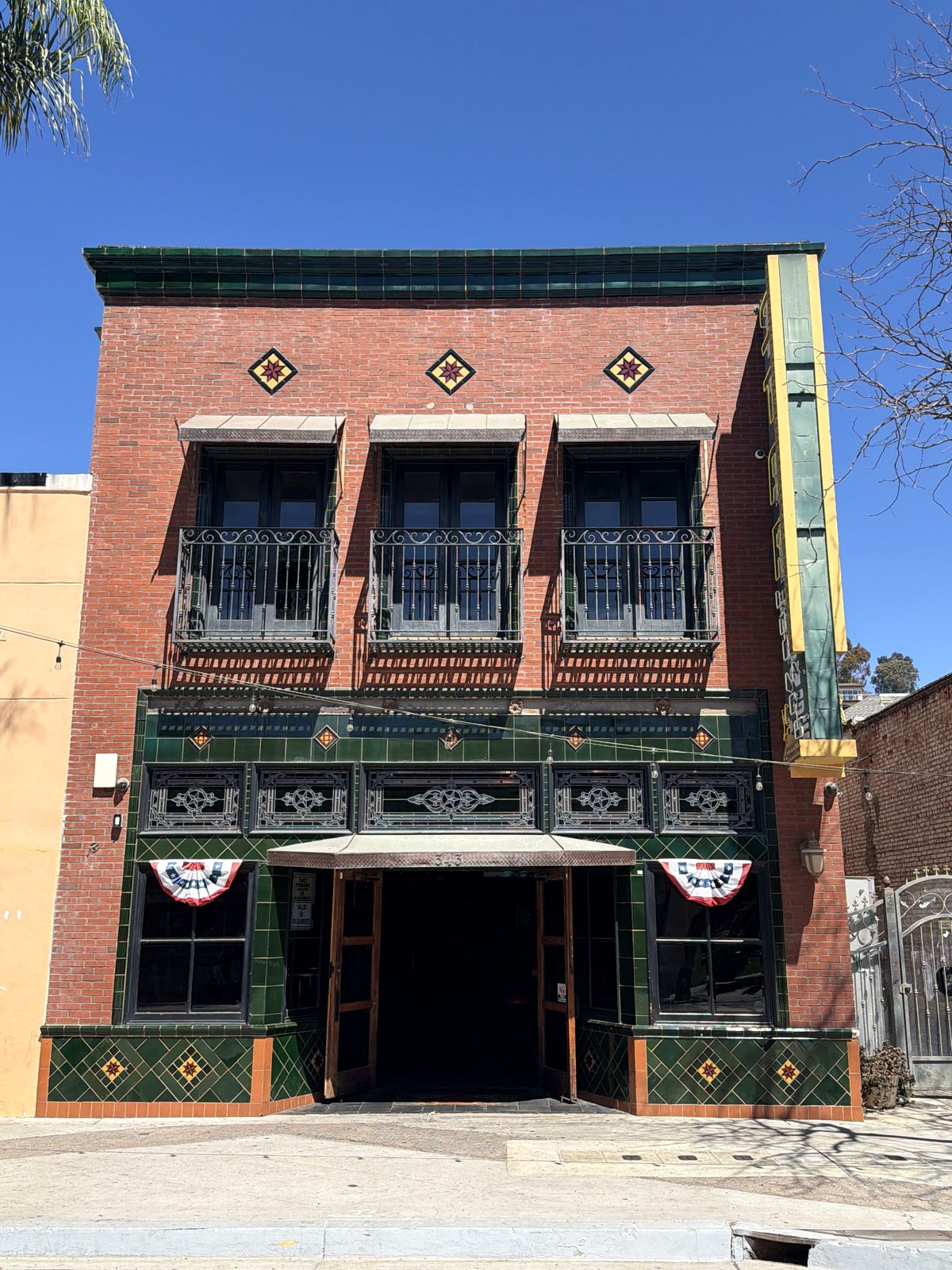
A blank concrete wall turned into an old-world pub front in green glaze. Michael’s first building facade downtown.
Kaapicat Café
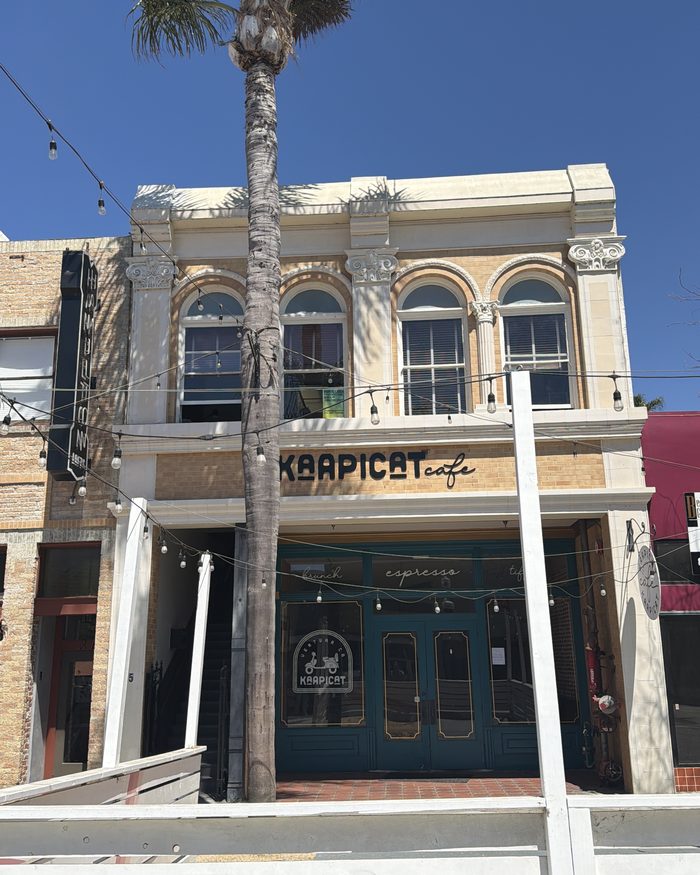
Ventura’s first post office, its front re-made from an old photograph.
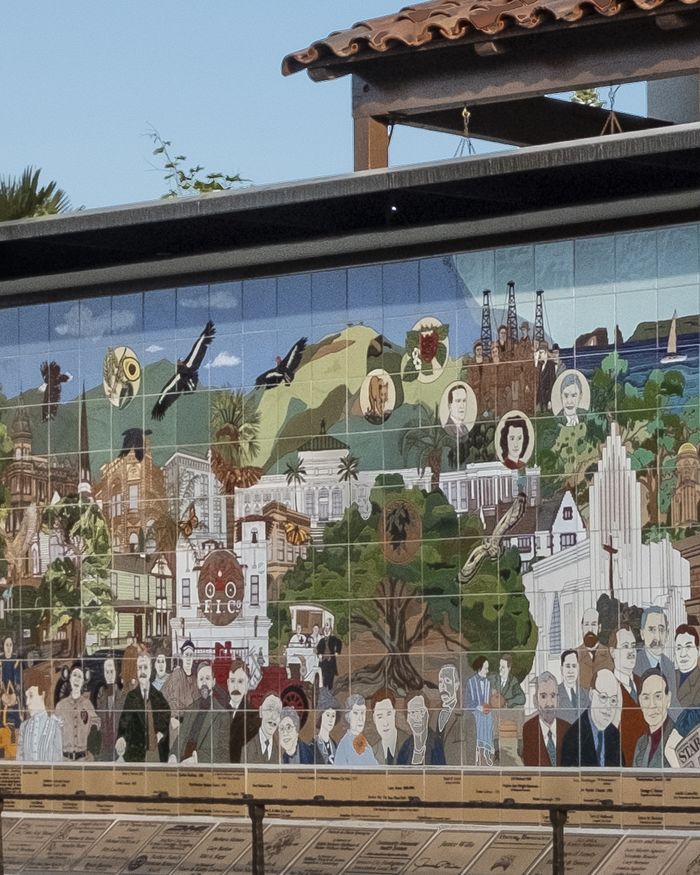
Ventura Historic Mural
Fifty feet of the city’s history in glazed tile, beside the Mission.