About the artistMichael
O’Kelly
A classical guitarist who learned to paint from a forger, spent a decade in Mexico, took Rufino Tamayo to the Hermitage, and ended up building walls out of fired clay.
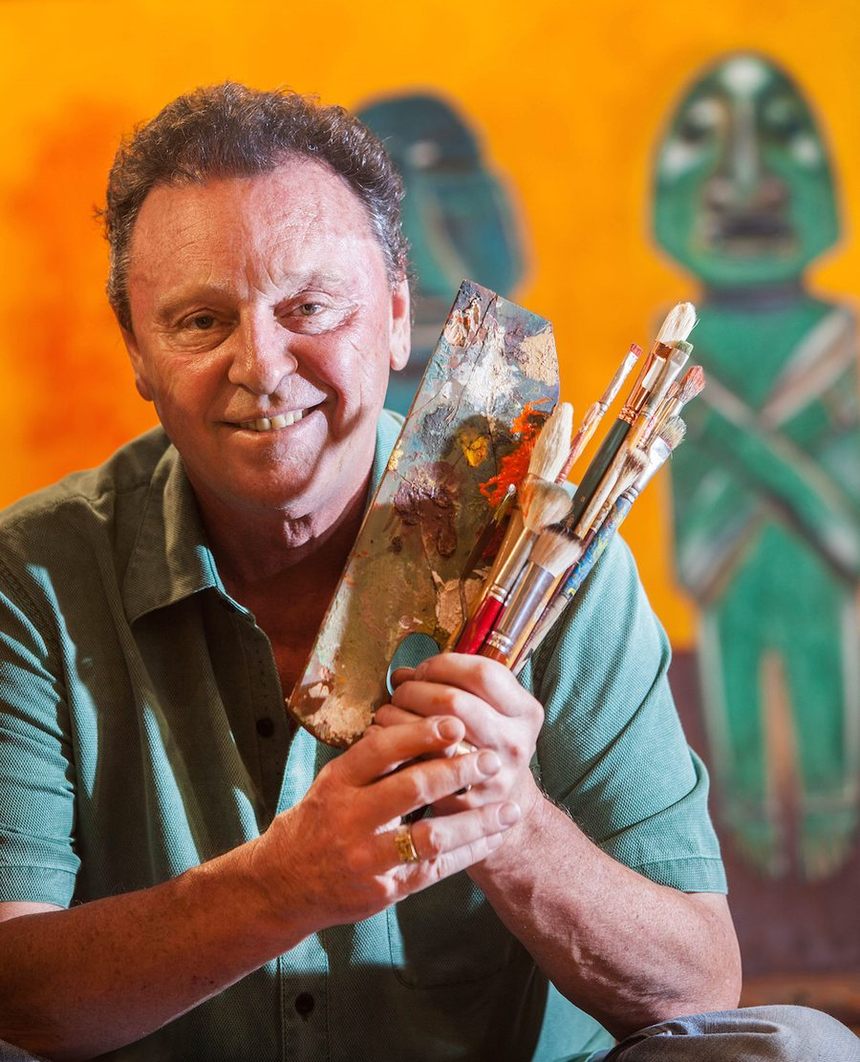
- Born
- Wales, 1950
- Based
- Ventura, California
- Trained
- Royal College of Music, London
- Media
- Ceramic tile, bronze, oil, dye sublimation, pen and ink
- Illustrated
- Rainbird Press, London, 1978–80
- Exhibited
- 40+ museums and galleries in 10 countries, including the US, UK, and Europe
The short version
Painter, musician, collector, publisher, muralist, writer
Most people who commission a ceramic mural meet a tile-setter. Michael O’Kelly arrives having already lived several other lives — concert guitarist and composer, ethnographic collector, book illustrator, publisher to Rufino Tamayo — and the murals are better for it. The crowd scenes are drawn the way a portraitist draws. The colour comes out of Latin America. The research comes out of a decade spent making museum collections.
Ceramic is one chapter, not the first. It is simply the one that turned out to be permanent.
- 1966–73Musician & composer
- 1966–nowFine artist & illustrator
- 1973–86Collector & ethnographer
- 1988–92Rufino Tamayo & publisher
- 2000–25Ceramic murals
- 2005–12Ray Bradbury
- 2006–nowWriter & film-maker
Musician & composer · 1966–1973
A classical guitarist by fourteen, a founder of the Omega Quartet by twenty
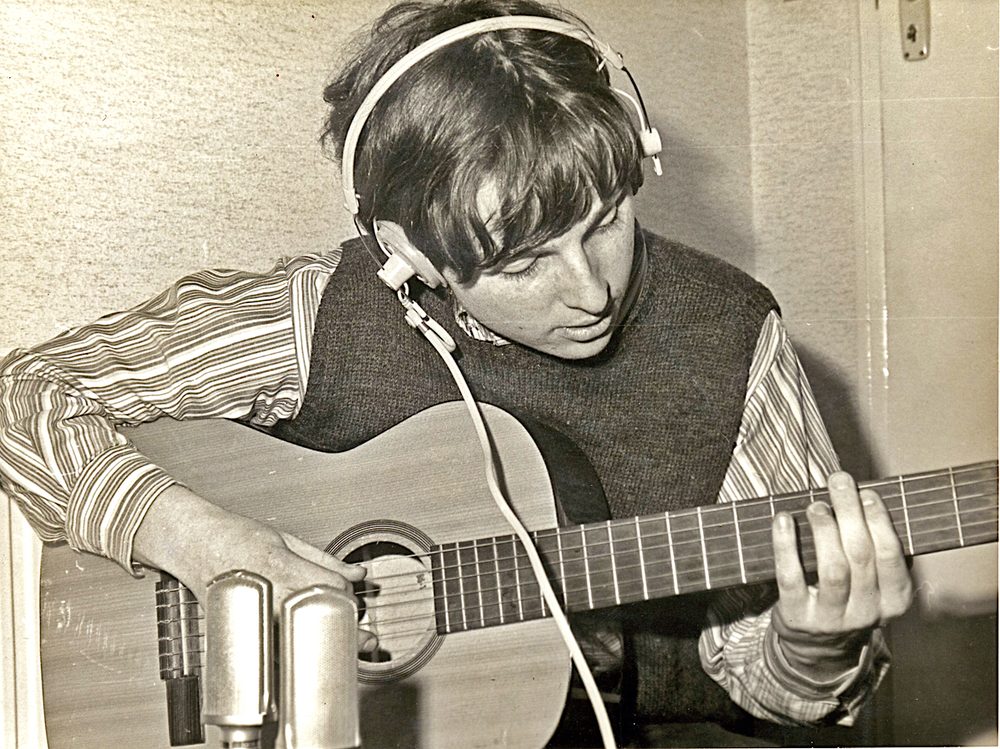
He studied classical guitar from the age of fourteen with Julian Byzantine, and at seventeen won a full scholarship to the Royal College of Music in London to study percussion and composition. Outside college he studied composition with Elisabeth Lutyens, the modernist composer best known to the public for her Hammer horror scores.
In 1966 he co-founded the Omega Guitar Quartet with Gilbert Biberian, Colin Downs and Peter Walker, and then the Omega Players, ten guitarists who doubled on percussion, piano and voice. Nothing like them existed. Composers including Lutyens, Reginald Smith Brindle, David Bedford and O’Kelly himself wrote new work for them, and new instruments were built to stretch the guitar’s range. The Quartet made two albums and toured the UK and Europe, and guitar ensembles followed in its wake from Japan to the Americas.
“…magical sonority that continues to pervade the mind…”
The Daily Telegraph on the Omega Players, 1971 · More reviews
Painting, learned sideways
Eight years with the most prolific forger of the century
The painting was learned somewhere less orthodox. For nearly eight years O’Kelly studied with Tom Keating, the British restorer the British Museum called “the most prolific forger of the 20th century”, who trained him in Renaissance and classical technique. Whatever else Keating was, he understood how an old-master picture is actually built: the underdrawing, the glazing, the patience.
That grounding is visible in every mural O’Kelly has made since, which is why the press keeps reaching for the same comparison — a level of detail and lavishness uncommon in ceramic, like a Renaissance painting. The Keating years are also the subject of his novel, The Joker’s Hand.
Mexico · 1973–1983
He went for a scholarship and stayed ten years
In 1973 a British Council scholarship took him to the Universidad Nacional Autónoma de México for postgraduate research into pre-Columbian music and dance. He stayed a decade, working out of the university and the National Museum of Anthropology, and travelling Mexico, Bolivia, Peru and the Amazon.
“It was a golden age. It thrilled and inspired me. It changed how I saw colour.”
Michael O’Kelly, on Latin America
Anyone who has stood in front of Las Palmas and wondered why a mural about a small California town is the colour it is now has the answer.
Collector & ethnographer · 1973–1986
Dance masks for the British Museum
In Mexico he assembled important collections of 19th- and early 20th-century dance masks, costumes and musical instruments. Over a decade they were acquired by the Museum of Mankind (the British Museum’s ethnography annex) in London, the Brighton Museum and the International Carnival and Mask Museum in Binche, Belgium.
His own collection of masks toured museums from 1978 to 1986, including the Centro Iberoamericano in Madrid and Santa Cruz in the Canary Islands. With his paintings, drawings and photography, his work has been shown in more than forty museums and galleries in ten countries: Aberdeen, Manchester, Liverpool and Bristol, the Commonwealth Institute and the Horniman in London, and in the US the Santa Barbara Museum of Art, the Carnegie Art Museum and the Museum of International Folk Art in Santa Fe.
Fine artist & illustrator · 1966 to now
The line under everything
His professional career in the visual arts began in 1973, as a researcher in Mexico City. He made more than 2,000 pen-and-ink drawings of pre-Columbian and other ancient artefacts, and illustrated books in London including The Encyclopedia of Ancient Civilizations and The First Emperor of China, both edited by Arthur Cotterell (Rainbird Press, 1978–80).
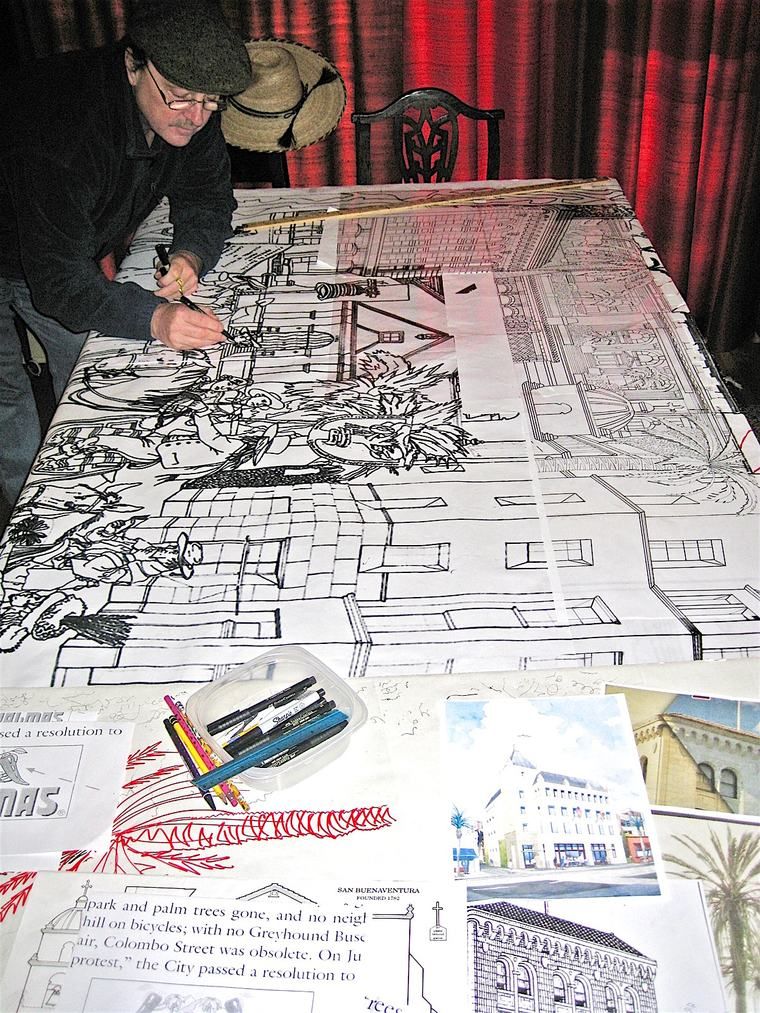
Book illustration is an unforgiving discipline: no colour to hide behind, no second pass, and an archaeologist checking every detail. It is also the exact skill a historical tile mural demands. Every O’Kelly mural begins as a full-size pen-and-ink cartoon, and the line that gets silk-screened onto raw terra cotta is a book illustrator’s line.
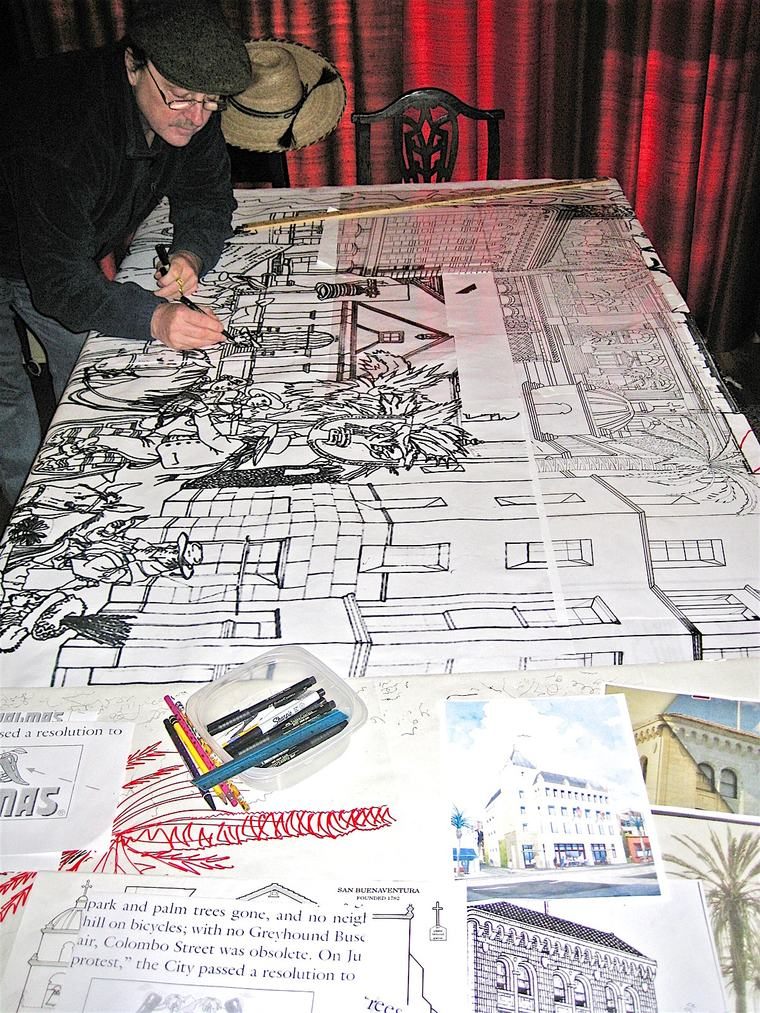 How a mural is madeDrawing, screen, glaze, fire — step by step
Rufino Tamayo & the Hermitage · 1988–1992
Taking Tamayo to the Hermitage
Back in London from 1983, he kept mounting exhibitions and painting. In 1988 he began a major project with Maestro Rufino Tamayo, one of the four great Mexican modernists with Rivera, Orozco and Siqueiros. Working with him in Mexico City through his own publishing company, Benavente/Kelly Ediciones y Arte, he helped publish Tamayo’s last stone lithograph.
In 1992 he co-produced Tamayo’s seventy-five-year retrospective, which travelled to the Munch Museum in Oslo, the Plastic Arts Museum in Moscow and finally the Hermitage in St Petersburg. Part of the Quincentennial celebrations, it was the first solo exhibition at the Hermitage by an artist from the Americas.
Painting
The work that never went on a wall
The paintings run alongside the commissions and always have: oil on canvas and panel and, lately, dye sublimation on aluminium, where the image is baked into the metal “like high-fired glazes on ceramic.” Click any picture to see it large.
Ceramic murals · 2000–2025
Decades of architectural ceramic
After Tamayo’s death he settled in Ventura, in 1993, and kept painting and mounting exhibitions. In 2000 he began designing decorative ceramics and murals, and it became the work people sought him out for: architectural ceramic for all the Disney parks, the City of Los Angeles, the cities of Camarillo, San Luis Obispo and Las Vegas, and a long line of private clients.
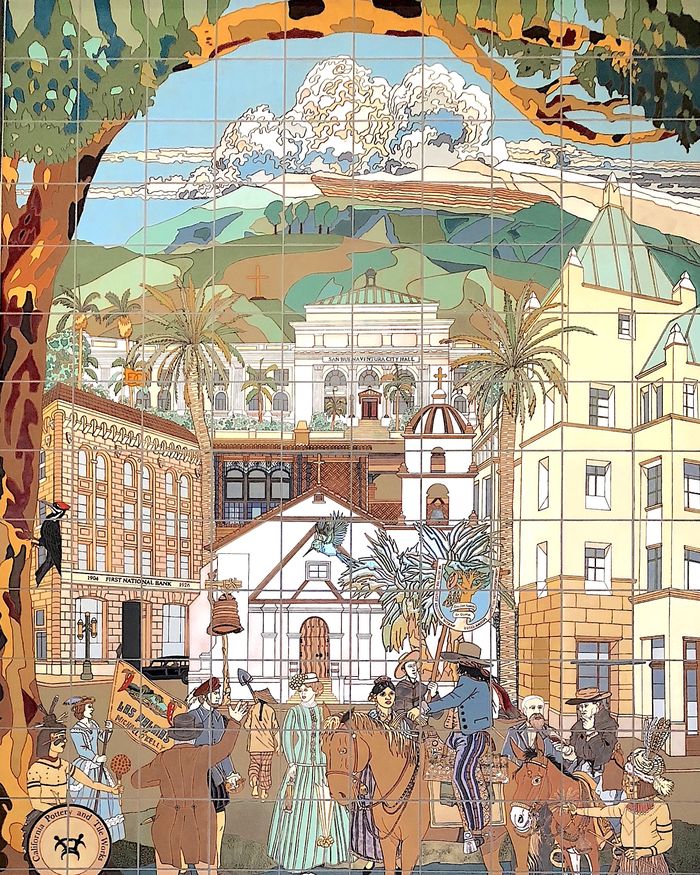
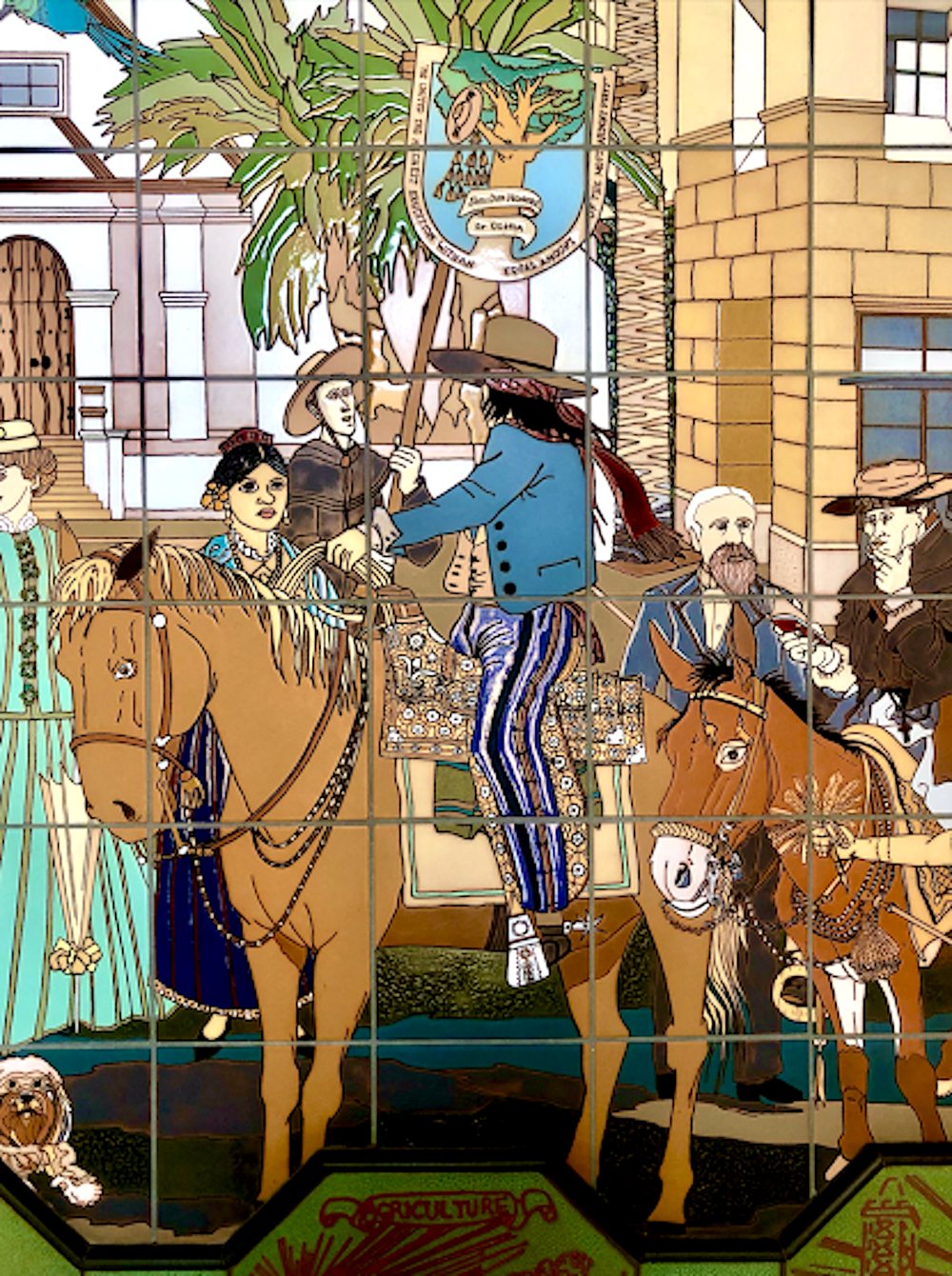
In Ventura he made the building facades of the Star Lounge, Kaapicat Café (the old Post Office), Paradise Pantry and much of the Watermark building on Main Street, and in 2018, with master ceramicist Juan Aguierre, the fifty-foot Ventura Historic Mural beside the Mission. In Santa Barbara: the exteriors and interiors of El Andaluz, the Ablitt House and El Jardín, and the Animal Kingdom Fountain at the Zoo.
The technique is cuerda seca, a method that reached California by way of Spain and became the language of Spanish Revival tile. How it works →
Ray Bradbury · 2005–2012
Seven years with Ray Bradbury
He became close friends with the author Ray Bradbury, and they made many things together. O’Kelly co-produced the Ray Bradbury Theatre Festival (The Illustrated Man at the Rubicon in 2007, Fahrenheit 451 at the Epic Theatre in 2009), wrote and produced the play The Ray Bradbury Odyssey, staged in Ojai in 2010, and made ceramic plaques including one for Bradbury’s 90th birthday.
He filmed Bradbury over the same years, until three weeks before his death. The film, Live Forever, premiered in 2012; Bradbury saw a rough cut before he died.
Writer & film-maker · 2006 to now
Bradbury told him to write it down
It was Bradbury, hearing his stories, who pushed him to start writing. Two books are out so far, with more on the way:
- A trilogy, with Todd BinkleyThe Joker’s Hand
The true story of Tom Keating, the British Museum’s “most prolific and versatile art forger of the 20th century,” and Jane Kelly, told by the man who spent nearly eight years at Keating’s easel. The art world’s shady dealings, the British class system and the secret techniques of the old masters.
- Part ISecret Techniques of the Old Masters
- Part IIThe Art of Deception
- Part IIIComing
Kindle, paperback and hardcover, on Amazon.
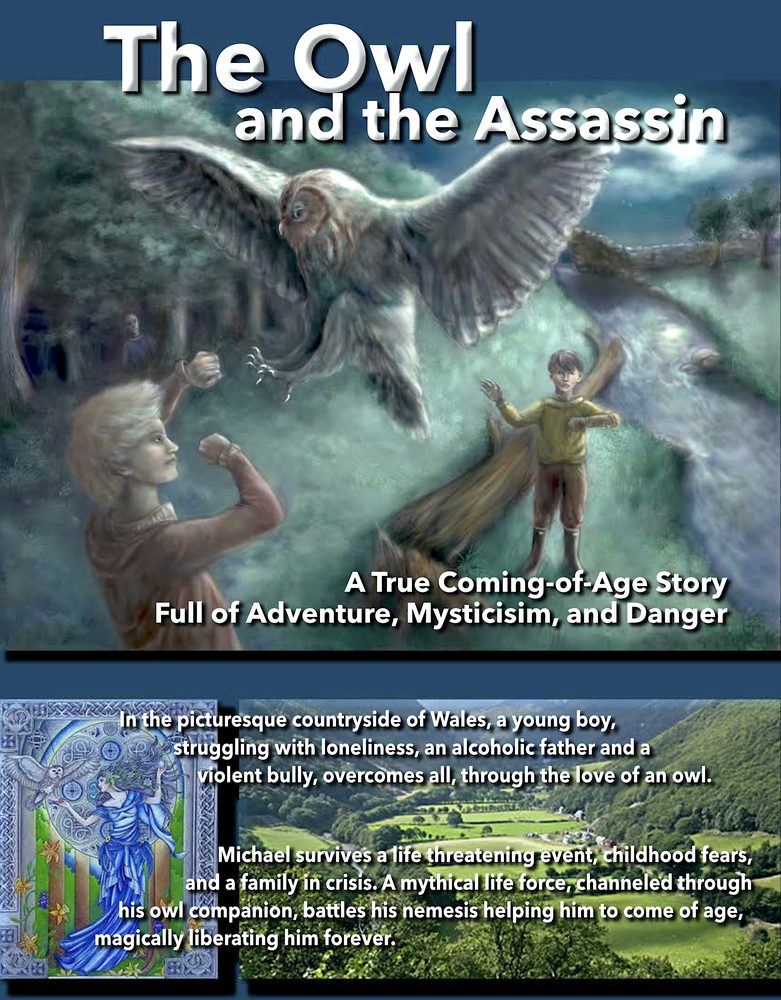 The Owl and the Assassin
A screenplay: a coming-of-age story about a boy and his owl, set in rural Wales in the 1960s.
- The Gold of Sipan
Scoundrels, scholars and smuggling: the greatest gold treasure found in the Americas is plundered and smuggled into the US. Written for television.
Recognition
Awards and honours
- 2015Mayor’s Arts Award — Artist in the Community
City of Ventura, presented at the Museum of Ventura County.
- 2009Beautify Ventura Award
60 California Street, with the mural cited among the building’s contributions to the downtown streetscape. See Las Palmas →
- VenturaVentura Beautiful
For contributions to the downtown streetscape, including the building facades on Main Street.
- Santa BarbaraSanta Barbara Beautiful
For architectural ceramic work in Santa Barbara.
Now
In the studio, in Ventura
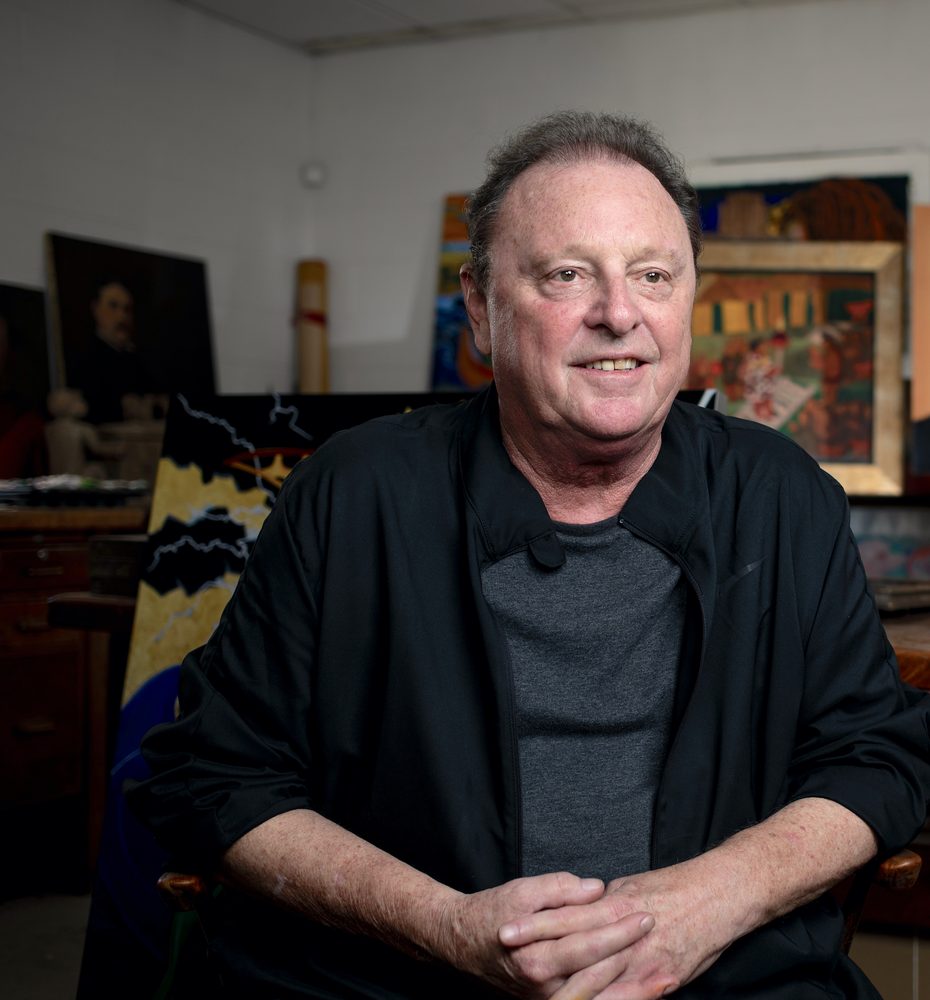
He lives and works in Ventura, a few blocks from most of what he has made. His most recent public work is Stepping Out, a twelve-foot bronze at Ventura College, unveiled in 2020.
Commissions still begin the same way they always have: a conversation about the building and the people in it, then a drawing.
Commissions
Commission a mural for your building
Residential, civic and commercial work throughout California, from the first pen-and-ink drawing to the last tile set on the wall.