News · October 2026 · By Michael O’Kelly · Building facades, part 2
Matching the 1920s: bringing back the Watermark’s tile
A 1920s bank on Main Street lost its tile. I re-made it in colours nobody is allowed to mix the old way any more, and matched it so closely to the originals that you can’t find the join.
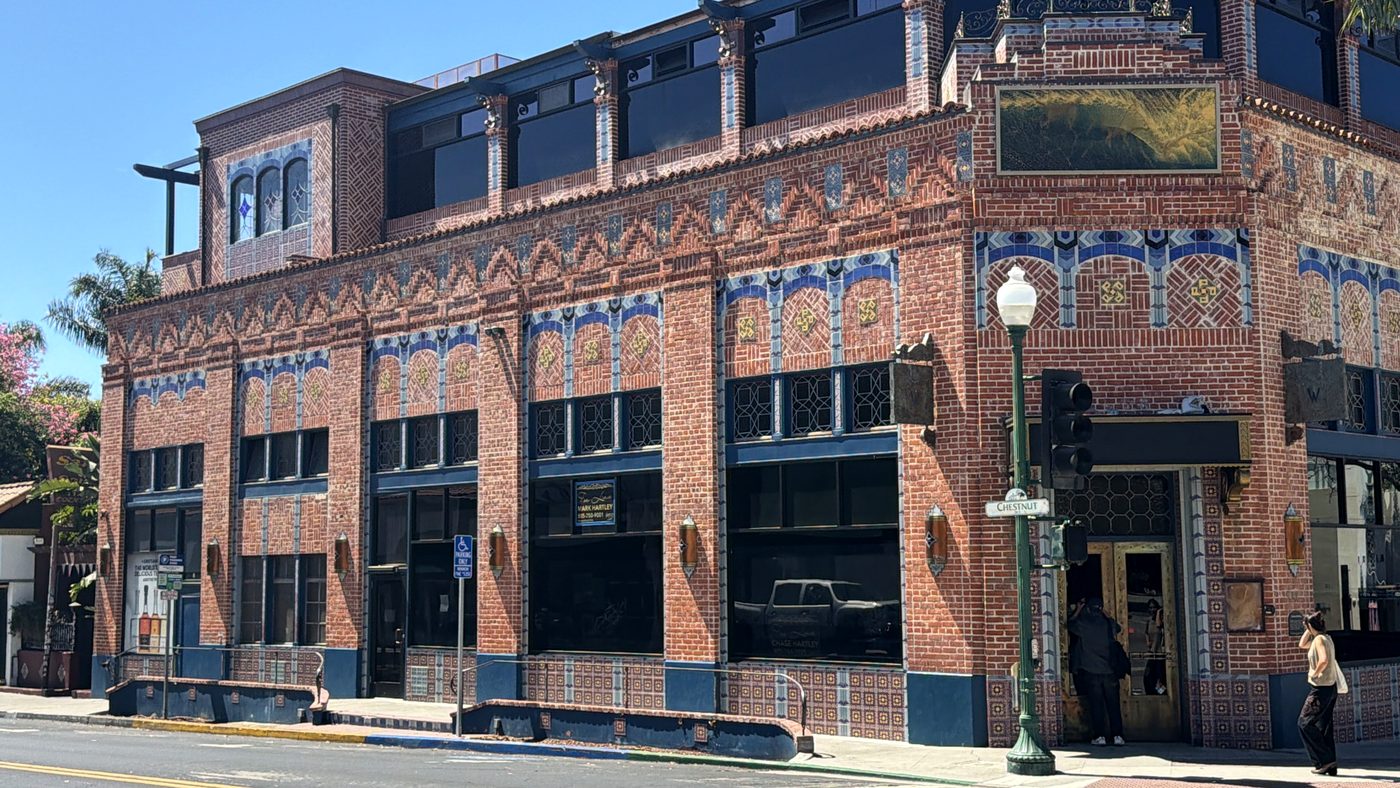
Most of the work I make is meant to stand out. A mural, a fountain, a new front on a blank building: the point is that you stop and look. This one asked for something harder. On the corner of Main and California in Ventura there is a 1920s building where I re-made more than half the tile you can see, and the job was to match the originals so well that the building reads as one piece, the way it did when it was new.
This is the second in my short series about the building facades I have made on Main Street. Last week was the Star Lounge, a blank concrete wall that needed a whole new face. This week is the opposite problem: a beautiful old building that had lost part of its face, and needed it back.
A 1920s bank that lost its tile
The building went up in the 1920s as a bank, the Ventura Guarantee and Loan Company. Over the years it became a jewelry shop, Bahn’s, which is why I still think of it as the Bahn’s Building, and later a restaurant called Watermark. The city lists it as a historic landmark, and the plaque on the wall singles out its decorative tile.
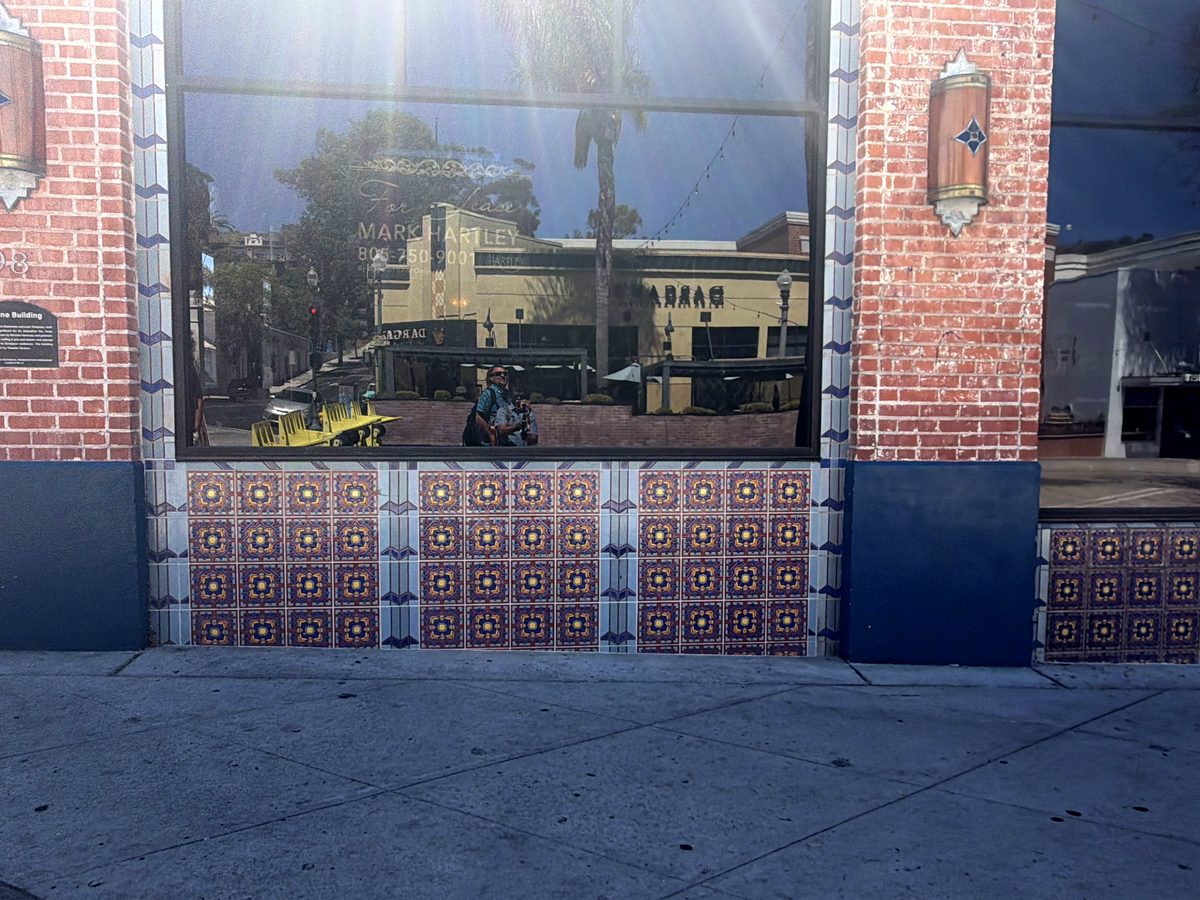
That tile was in the wainscoting, around the doors and around the window frames. But at some point, I think probably in the ’60s or ’70s, a lot of it was ripped out. Someone just took the tile away. Mark Hartley, who owns the building and a couple of others downtown, asked me if we could re-create it.
Colours you are not allowed to make any more
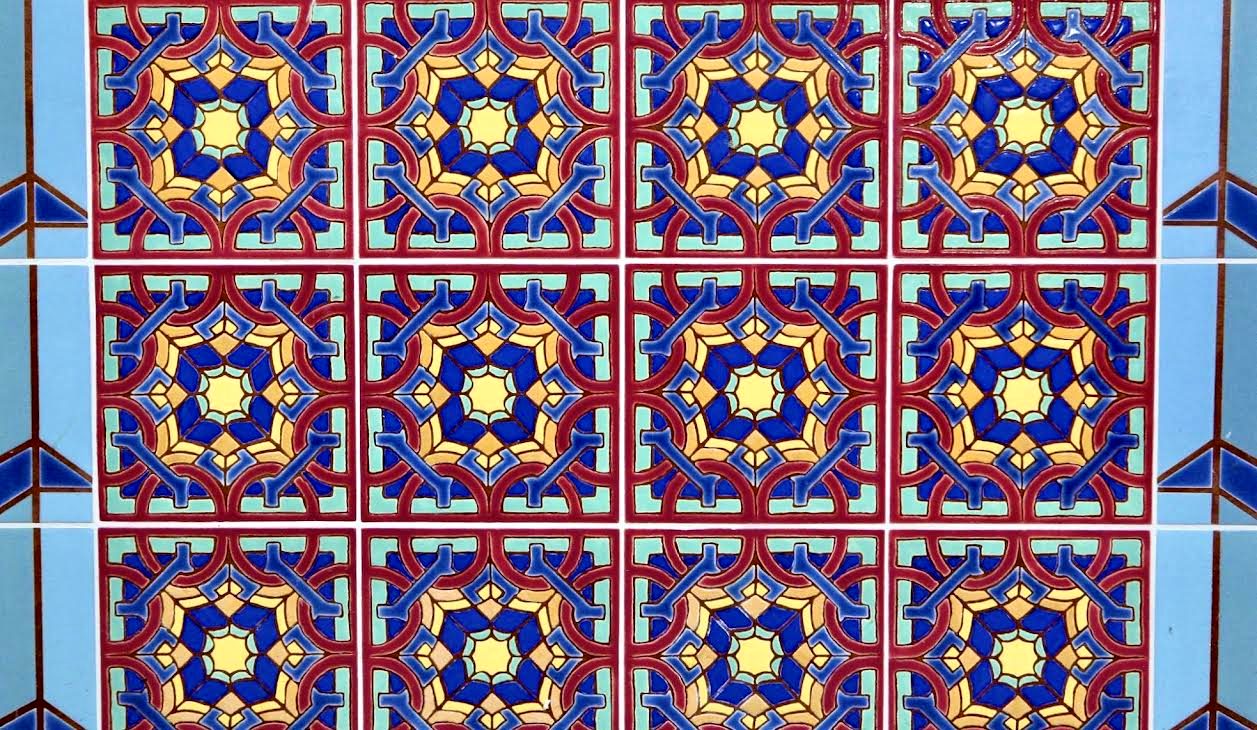
Copying a pattern is not the hard part. Matching the colour is. In the 1920s, tile makers used lead, barium and arsenic to get some of their colours, and today we are all prohibited from using those materials, because they are dangerous. So the cobalt, the gold and the deep red on that building could not be made the way they were made a hundred years ago.
We had to come up with the colours a different way. And we managed to get them exactly the way they looked in the 1920s. In 2006 we made somewhere between 60 and 75 per cent of the ceramics you see on that building today. I am not sure of the exact amount myself.
A match you can’t find
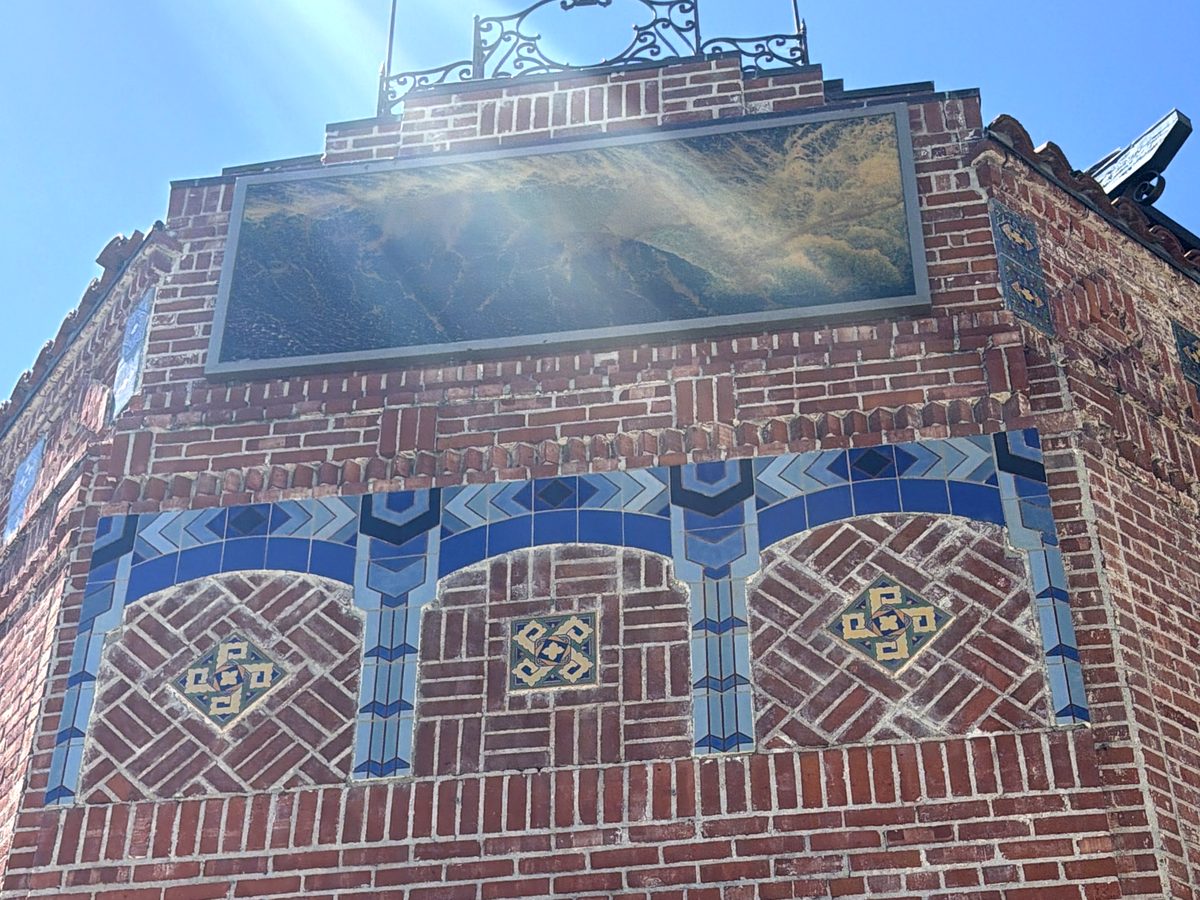
The pattern was never the hard part. My new tile had to sit right next to originals that had been on that wall for eighty years, made with glazes nobody is allowed to use any more, and it had to match them closely enough that you can’t see where one stops and the other starts. Stand on the corner today and try to find the join. That is the part of this job I am proudest of.
What people do notice is that the building has livened up. When a third floor was added later, we made the same tile for that too, so the new storey looks as if it had always been there. Today it is one of the most significant architectural buildings in this part of Ventura.
Has your building lost something?
A lot of older buildings have been through a remodel or two that did them no favours. Tile gets covered over, broken, or simply removed. If you own one of those buildings, the original look is often not gone for good. Depending on what survives, I can:
- Match tile that is still there, pattern and colour, and fill the gaps so you can’t see the join.
- Re-create tile that has been lost, from what remains on the building, old photographs or the building’s records.
- Extend the look to something new, like the Watermark’s added floor, so new and old read as one building.
You can see the whole Watermark story, with before-and-after photos and the film, or go and stand on the corner of Main and California and try to find my tile. If your own building looks tired and drab, or has lost its original tile, it can come back to life. Tell me about it and I can give you an estimate or a concept drawing to start from.
— Michael O’Kelly, Ventura